✦ Learn ✦
What You Need to Start Needlepoint
A practical guide to the essential materials and tools for beginning your needlepoint journey.
By Molly · July 11, 2026
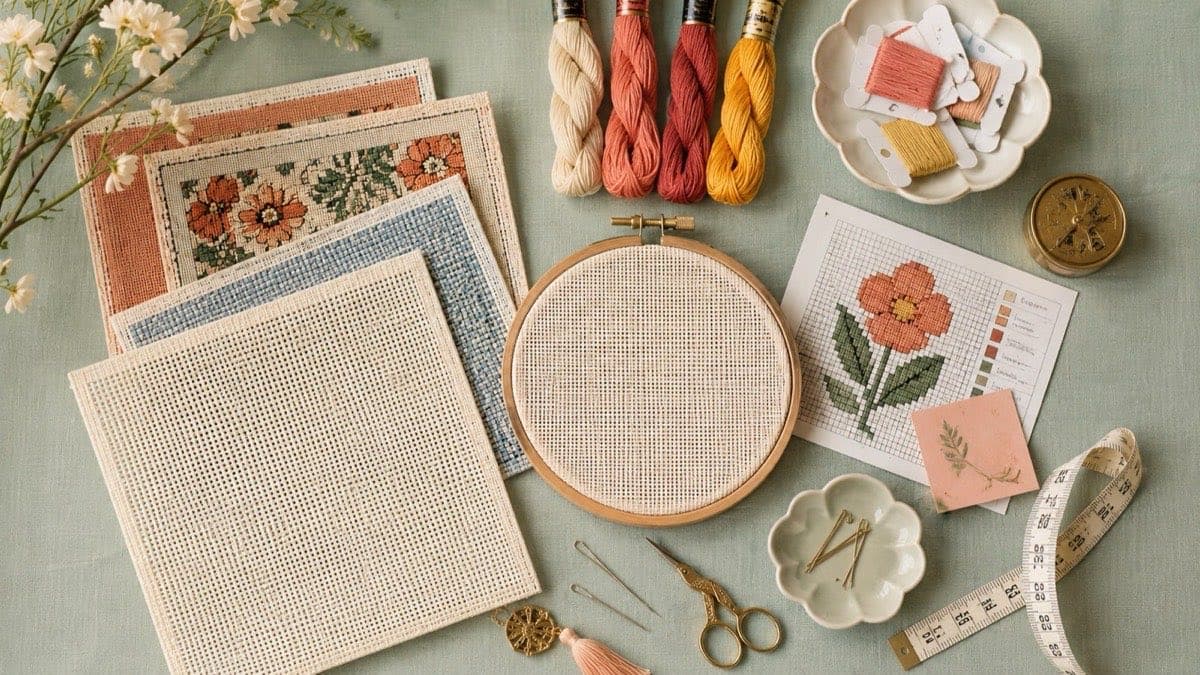
Quick answer: You need four essentials: canvas (start with 14-count mono), a tapestry needle (size 18 for 14-count), embroidery floss (DMC is the standard), and stabilization (an embroidery hoop works perfectly for beginners). Optional supporting tools like scissors, ruler, and thread organizer enhance comfort. Total beginner investment: $25–40.
The beauty of needlepoint is that you don't need an elaborate setup to begin. A few quality essentials, thoughtfully chosen, are all you need to create something beautiful. This guide focuses on what truly matters and why.
The Core Four
1. Canvas
Your canvas is your foundation. Needlepoint canvas is typically made from interlocked threads that create a regular grid. You'll encounter two main types:
- Mono canvas (single-threaded grid): Simpler to work on, ideal for beginners
- Penelope canvas (double-threaded grid): Allows for greater detail and finer work
Start with 14-count mono canvas if you're new to needlepoint. The larger stitch size is forgiving, and the straightforward grid prevents frustration during your learning phase.
2. Needle
A needlepoint needle differs from sewing needles—it has a larger eye to accommodate thicker embroidery floss and a slightly blunt point that glides between canvas threads without splitting them.
Size matters: match your needle size to your canvas count. A 14-count canvas typically uses a size 18 tapestry needle. The needle should pass through the canvas smoothly without requiring excessive force.
Start with a pack of assorted tapestry needles; they're inexpensive and forgiving while you develop your technique.
3. Thread (Floss)
Embroidery floss is the thread you'll be stitching with. The most common choice is DMC embroidery floss, available in hundreds of colors. Each skein is typically 8 meters long and costs very little.
When you purchase a chart, the color guide specifies which DMC numbers you'll need. This makes shopping straightforward—the colors are standardized across suppliers.
Pro tip: Buy 2-3 extra skeins of your main color. Running short mid-project is frustrating, and dye lots can vary slightly.
4. Stabilization (Hoop or Frame)
Keeping your canvas taut while stitching prevents puckering and ensures even tension. Your options:
- Embroidery hoop (8-10 inches): Affordable, portable, and perfectly adequate for small projects
- Floor stand frame (for larger projects): More expensive but invaluable if you plan to work on bigger pieces
A hoop is an excellent starting point. The modest investment lets you test your interest before committing to larger equipment.
The Supporting Cast
Beyond the essentials, these items enhance comfort and accuracy:
| Item | Purpose | Cost |
|---|---|---|
| Scissors (sharp, small) | Precision thread cutting | $5–15 |
| Ruler or measuring tape | Accurate canvas sizing and centering | $3–8 |
| Sticky notes or tape | Marking rows and preventing miscounts | $2–4 |
| Chart printed or digital | Your pattern guide | Free–$15 |
| Thread organizer | Keeping colors sorted and labeled | $5–20 optional |
| Needle threader | Especially helpful for thicker floss | $2–3 |
These aren't mandatory, but they transform the experience from tolerable to genuinely pleasant.
The Workspace
Needlepoint is adaptable. You can stitch in your favorite chair with good lighting, at a table with a floor hoop stand, or anywhere that offers comfort and visibility. The ideal setup includes:
- Good lighting: Natural light is lovely; a lamp nearby is essential for evening work
- Comfortable seating: You'll spend hours here; your back will thank you for a proper chair
- A small table: For holding scissors, extra thread, and your chart reference
- Space for supplies: A basket or box keeps materials contained and accessible
Budget Breakdown
A complete beginner's setup costs approximately $25–40:
- Canvas (10–15 inches): $3–5
- Floss (6–8 colors for a small project): $5–10
- Needle (assorted pack): $3–5
- Hoop (8-inch): $3–5
- Scissors and basic supplies: $5–10
- Chart: $0–15
This is genuinely affordable compared to most creative hobbies. As you progress, you'll naturally invest in nicer tools and specialty items, but beginning simply is wise.
One Final Thing
The most important element isn't on any shopping list: patience with yourself. Your first stitches may be uneven. Your tension may vary. These are not failures—they're the learning process.
Every needlepoint artist began exactly where you are now. With a few hours of practice, your hands develop muscle memory. With a few projects, your technique becomes unconscious and fluid.
Start simple. Gather these essentials. Choose a small, appealing project. Then sit down and create something beautiful. You have everything you need.