✦ Learn ✦
Getting Started with Needlepoint
Begin your needlepoint journey with this welcoming guide to why, what, and how — from choosing materials to finishing your first piece.
By Molly · July 12, 2026
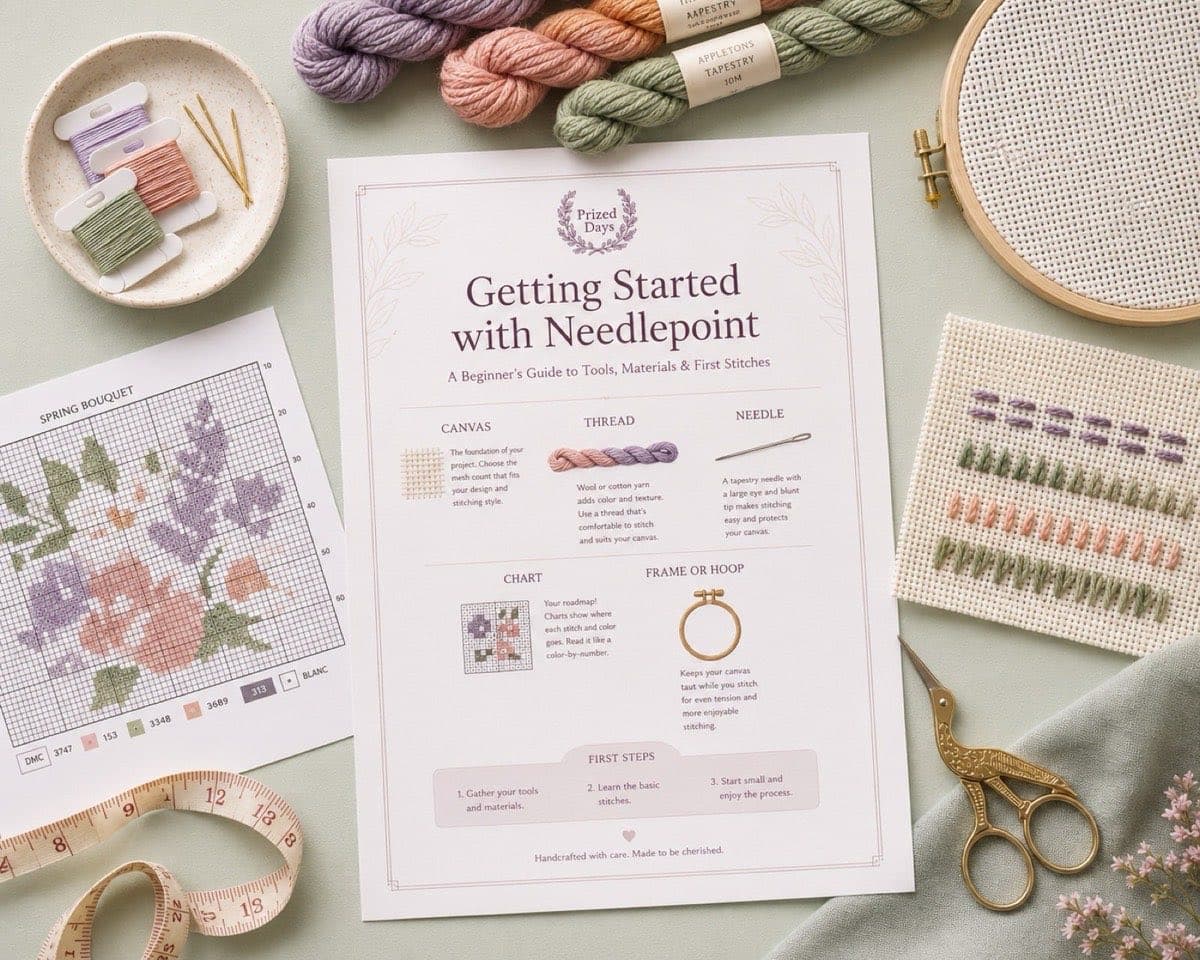
Quick answer: Needlepoint is a meditative craft combining tactile creation with tangible results, ideal for anyone seeking creative satisfaction without requiring expensive equipment or training. Start with 14-count mono canvas, basic needle and thread, an embroidery hoop, and a project that genuinely appeals to you—total investment is $25–40.
Needlepoint is one of those rare hobbies that feels both deeply meditative and genuinely rewarding. There's something magical about watching a blank canvas transform, stitch by stitch, into something beautiful and tangible—something you made with your own hands. If you've ever wondered whether needlepoint is for you, the answer is simpler than you think: yes. It is.
Whether you're drawn to needlepoint for its creative satisfaction, its calming rhythm, or simply because you love the idea of creating something heirloom-worthy, this guide will walk you through the entire journey. From your first materials to your finished piece, you'll find everything you need to begin with confidence.
Why Needlepoint?
Before diving into the technical "how," let's talk about the "why." Needlepoint offers something rare in our busy world: a genuine pause. Each stitch is an act of intention. There's no algorithm, no notification, no optimization—just you, needle, thread, and canvas. The meditative quality appeals to designers and artists who crave tactile creation. The finished results appeal to anyone who appreciates craft and beauty.
And unlike many hobbies, needlepoint doesn't require an expensive setup, a dedicated studio, or specialized training. You can begin with a modest investment and a few hours of practice. Your first projects won't be museum-quality, and that's perfectly fine. By your third or fourth piece, you'll have developed genuine skill.
The Four-Step Journey
The path from novice to confident needlepoint artist follows a natural rhythm:
- Gather your materials — choose canvas, needle, thread, and tools
- Choose your project — select a chart and canvas size that match your ambition
- Prepare your chart — print and familiarize yourself with your pattern
- Stitch and enjoy — settle into the meditative work itself
Each step builds on the last, and each has nuances worth understanding. Let's walk through them.
Step 1: Gather Your Materials
The beautiful truth is that needlepoint requires very little. You need canvas, a needle, thread, and something to keep your work taut. Beyond those essentials, a few supporting tools make the experience genuinely pleasant rather than merely tolerable.
The investment is modest—a complete beginner's setup costs $25–40. You can spend more on premium tools later as your interest deepens, but starting simply is wise. Canvas from your local craft store, affordable embroidery floss, and an inexpensive hoop are genuinely sufficient to create something beautiful.
Learn exactly what you need and why in our detailed materials guide.
Step 2: Choose Your Project
Your project choice—specifically, your canvas mesh count and finished size—is one of the most important decisions you'll make. A 14-count canvas produces large, forgiving stitches ideal for learning. An 18-count canvas offers a sweet middle ground. A 22-count canvas delivers extraordinary detail but demands patience and skill.
The mesh count affects not just how the piece looks, but how long it takes to complete and how comfortable the stitching process feels. First-timers should lean toward 14-count mono canvas. It's forgiving, quick to complete, and builds genuine confidence.
Your project should appeal to you—genuinely appeal, not just "seem like something you should do." You'll spend hours with this piece. Choose something that makes you want to return to it.
Explore mesh counts, canvas types, and how to select the perfect pairing for your vision.
Step 3: Prepare Your Chart
Once you've chosen your project, you have a pattern—a needlepoint chart that shows you exactly which stitches go where. Charts are beautifully logical once you understand the system. Each square on the chart represents one stitch on your canvas. The chart uses symbols or colors to tell you which thread color to use.
If your chart is digital, you'll want to print it. A well-printed chart is a joy to work from. Colors are clear, grids are crisp, and your stitching flows naturally. Paper quality, print settings, and handling all matter more than you'd expect.
Before you stitch the first stitch, spend time reading your chart. Understand its symbol language. Identify your starting point. This small investment of attention prevents countless frustrations later.
Master chart reading and printing with our practical guides.
Get expert printing and chart care tips.
Step 4: Stitch and Enjoy
This is the part no guide can fully capture. You'll settle into your favorite chair, position your hoop, thread your needle, and begin. The first few stitches will feel awkward. Your tension will be uneven. You'll probably frog a few stitches—pulling them out and redoing them.
By your tenth row, your hands will remember the motion. By your hundredth stitch, you'll find yourself in genuine flow. The outside world fades. Your focus narrows to the intersection of needle, thread, and canvas. Time moves differently. Hours pass like minutes.
This is needlepoint. This is why people do it.
The Mindset
The most important thing to understand as you begin is this: needlepoint is not a race. There is no "finishing quickly." The pleasure is in the doing, not in the completing. Some of the most satisfied needlepoint artists are those who keep multiple projects going—working on one when they want fine detail, switching to another when they want faster progress.
Your first project won't be perfect. Some stitches will be uneven. The tension will vary. Small mistakes will exist in corners only you'll notice. This is not a tragedy. This is the evidence of something handmade by human hands. It's beautiful precisely because it's real.
Ready to Begin?
If you're excited to start, begin with browsing our collections of charts. Find something that genuinely delights you—a design that makes you smile or feel inspired. That attraction is your compass. It will carry you through the learning curve and into genuine craft.
Welcome to needlepoint. Your hands and heart are ready.